1. The Illusion of Modern Software
Look around almost any mid-sized enterprise today:
The CRM works.
The accounting software works.
The warehouse inventory scanner works.
The e-commerce storefront works.
The payment gateway works.
The WhatsApp business number works.
Every individual tool functions as advertised. Yet despite spending tens of thousands of dollars on modern software, executive leadership asks a bewildering question: Why does our business still depend entirely on spreadsheets, manual phone calls, and constant human follow-ups?
The answer is simple: Software can work perfectly in silos while your business remains completely disconnected.
2. The 5 Painful Symptoms of Disconnected Operations
When software applications cannot exchange data automatically, human beings become the integration layer. This produces five chronic operational bottlenecks:
Symptom 01: Duplicate Data Entry
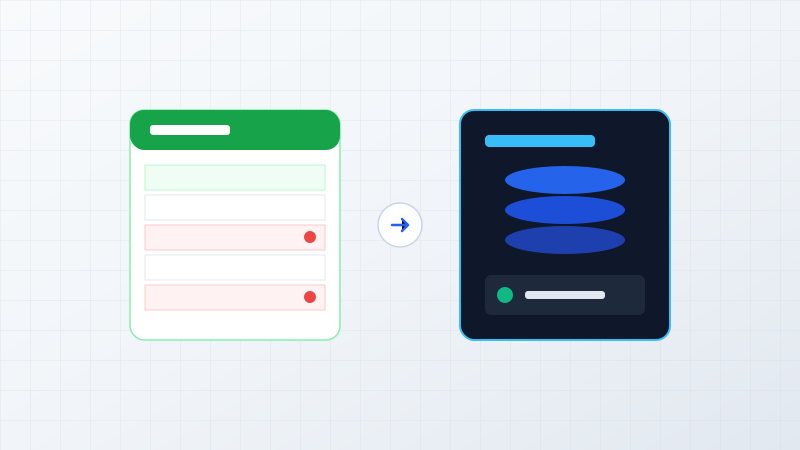
A customer places an order. A sales admin types the details into the CRM. Another staff member re-types the customer name and billing address into the accounting tool. The warehouse lead copies the SKU into an inventory spreadsheet. Every redundant keystroke wastes time, introduces spelling errors, and delays fulfillment.
Symptom 02: Fragile Manual Handoffs
Information travels through people rather than automated pipelines:
When an employee takes sick leave or overlooks an unread message, customer orders stall silently.
Symptom 03: No Single Source of Truth (Systems Disagree)
When accounting says an invoice was paid on Tuesday, but the CRM shows it overdue, and the inventory tool shows out-of-stock while the warehouse floor has four crates sitting on a pallet, which system is authoritative? When systems contradict each other, decision-makers lose trust in all reports.
Symptom 04: The "Blind Management" Problem
When the CEO or Managing Director asks, “What is our exact cash position and fulfilled order volume right now?”, nobody can answer in real time. Providing an answer requires three department heads to run CSV exports, spend hours reconciling columns in Excel, and deliver a backward-looking report three days later.
Symptom 05: Exponential Administrative Overhead
As revenue grows 2x, administrative headcount must grow 2x just to handle the manual copy-pasting between disconnected tools. Operational margins deteriorate under manual overhead.
3. The Solution: Keep • Connect • Automate • Replace
When faced with disconnected systems, the standard (and disastrous) vendor advice is: “Rip everything out and buy our all-in-one mega ERP.”
Replacing everything is disruptive, high-risk, and rarely succeeds. ByteStream recommends a surgical, four-stage integration framework:
KEEP & CONNECT
KEEP: Retain the tools your team genuinely likes and uses effectively (e.g. specialized CRM or statutory accounting).
CONNECT: Build secure API webhooks and data pipelines between them so records synchronize automatically.
AUTOMATE & REPLACE
AUTOMATE: Eliminate manual handoffs by triggering automatic dispatch alerts, payment notifications, and ledger entries.
REPLACE: Only replace tools that lack APIs or fundamentally restrict business growth.
4. The Connected Enterprise Architecture
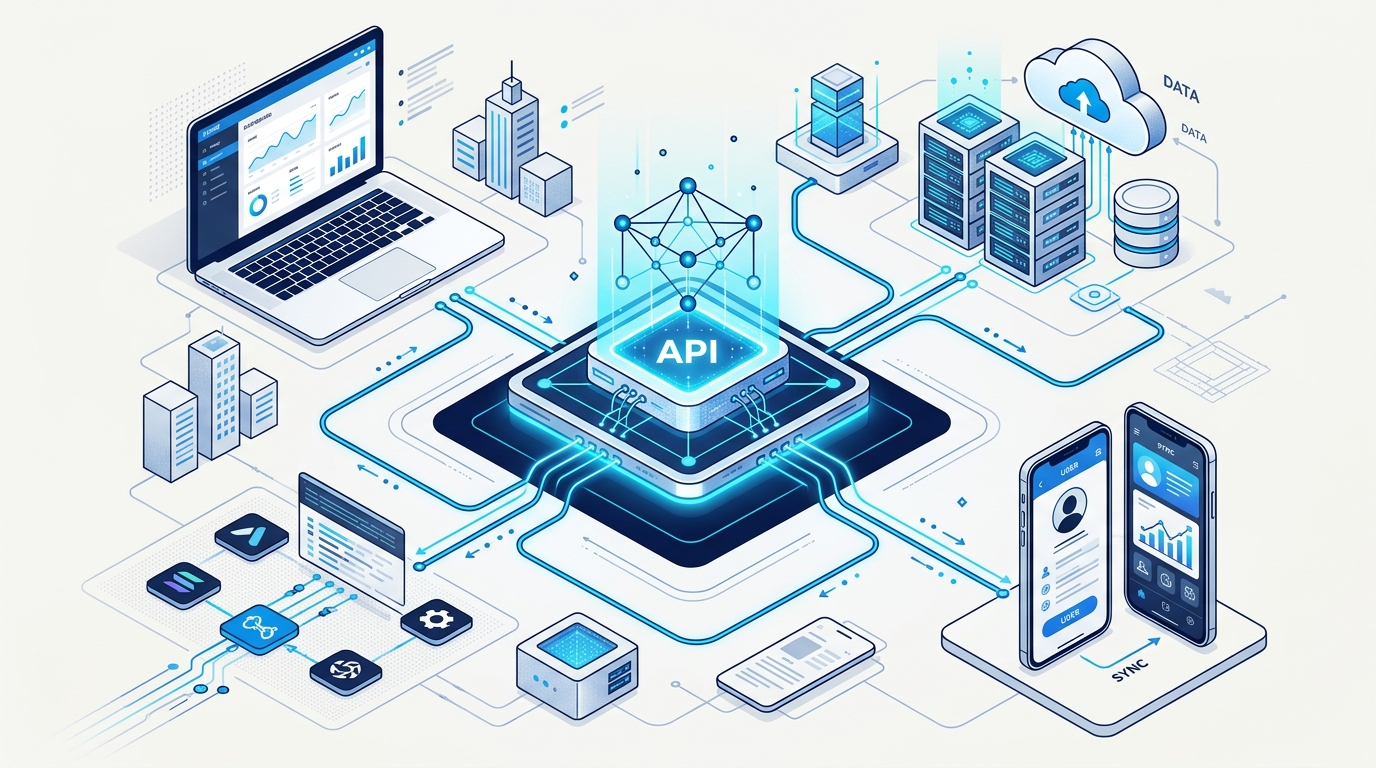
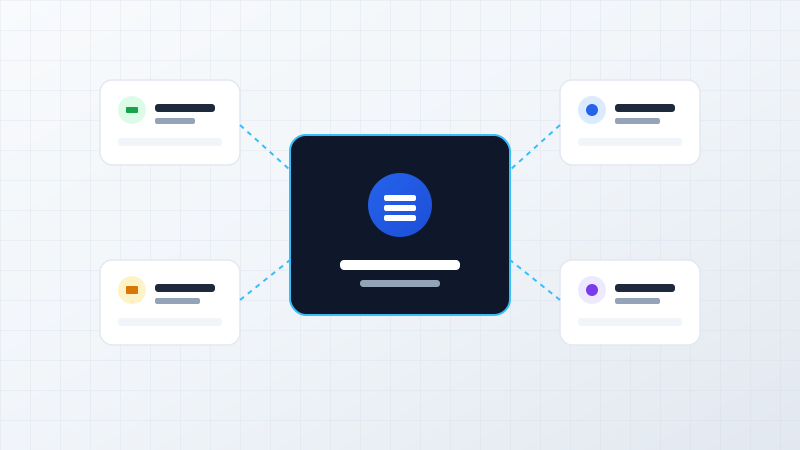
Instead of a web of tangled peer-to-peer connections, modern businesses deploy a Central Integration & API Layer:
The transformation is profound:
Disconnected Reality
System → Person → Excel → Phone Call → Person → System
Connected Transformation
System → Secure API → Automated Workflow → System → Real-Time Dashboard